UD Technologies logo

Hydrochloric Acid Recovery & Purification

Hydrochloric-acid recovery, concentration and purification systems selected around feed strength, contaminants, capacity and reuse target.

UD Technologies · Vadodara, India
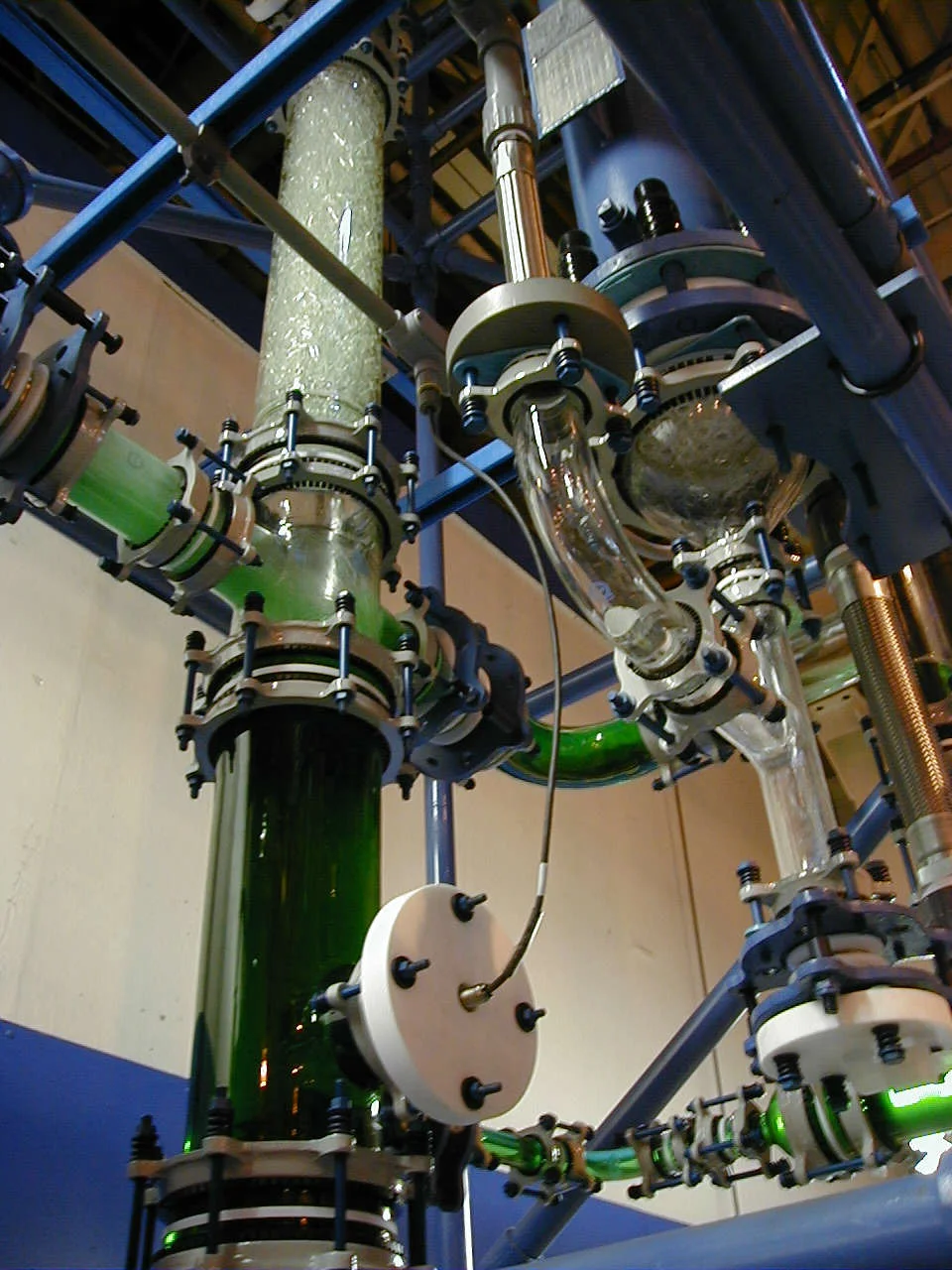
Hydrochloric acid recovery and purification plant

Acid recovery and reuse

Recover value from dilute or contaminated hydrochloric acid.

Hydrochloric acid and water form a maximum-boiling azeotrope near 20.2 wt% HCl at atmospheric pressure. Below that point, straightforward evaporation can concentrate acid toward the azeotrope, but producing stronger acid requires a change in relative volatility or pressure. UD Technologies selects extractive, pressure-shift or purification arrangements around feed concentration, contaminants and reuse specification. Recovery reduces neutralisation demand and the cost and environmental load associated with dilute spent-acid disposal.

Recovery

Concentrate dilute HCl streams for reuse.

Purification

Separate high-boiling contamination from reusable acid.

Multiple technologies

Extractive and pressure-dependent separation options.

Materials selected by duty

Construction follows concentration, capacity and contaminants.

Salient features

Choose the separation route around the acid equilibrium.

Materials, utilities, controls and equipment arrangement are selected around the feed and required product.

Azeotrope-aware design

Technology selection recognises the atmospheric HCl/water limit.

Extractive concentration

Sulfuric acid or calcium-chloride solution changes relative volatility.

Pressure-shift recovery

Vacuum and pressure alter azeotrope composition for separation.

Contaminant removal

High boilers remain in the reboiler bottoms during purification.

HCl gas recycle

Released gas can be reabsorbed into pure acid to rebuild concentration.

Reduced neutralisation

Recovered acid replaces disposal and fresh-acid demand.

Process configuration

Select recovery or purification around the feed.

Final capacity, materials and instrumentation are confirmed against the process data and site utilities.

Dilute-acid concentration

Concentrate below-azeotrope hydrochloric acid

Technology options

Atmospheric limit
Approximately 20.2 wt% HCl at 1 bar
Beyond azeotrope
Extractive agent such as H₂SO₄ or aqueous CaCl₂
Alternative
Pressure-shift distillation using vacuum and higher pressure
Contaminated-acid purification

Remove high boilers and rebuild acid concentration

Process sequence

Feed
Concentrated HCl containing high-boiling impurities
Distillation
Split into approximately 20% HCl and HCl gas
Purification
High boilers leave from first-section reboiler bottoms
Reconstitution
Absorb HCl gas into purified acid to produce stronger acid

Related system

Absorb recovered HCl gas efficiently.

Compare adiabatic and falling-film systems for converting hydrogen chloride gas into hydrochloric acid.

Explore HCl gas absorbers →

Discuss your requirements

Let’s find the right solution.

Contact our team ↗